
Whether Henry Nowak’s murder should be politicised or not is up for debate. On one side, many have pointed to comments made by Nowak’s father, who directly asked for the tragedy not to be used for political purposes, and have criticised those using the case to advance wider arguments. On the other, some argue that this quotation is being used as an excuse not to express the same level of outrage that might have been seen had the victim belonged to a different demographic group. As the case receives wider coverage by the day, it has increasingly divided opinion across Britain.
It is not only Britons who have become invested in the story, however. Various groups across Europe have used the incident to promote anti-immigration and the conspiracy theory of a “Great Replacement” of white Europeans narratives as a result of mass immigration. 1 Across the Atlantic, billionaire Elon Musk has repeatedly commented on the case, while U.S. Vice President JD Vance has also weighed in, linking the incident to broader debates surrounding immigration.
Across the Atlantic, billionaire Elon Musk has repeatedly commented on the case, while U.S. Vice President JD Vance has also weighed in, linking the incident to broader debates surrounding immigration.
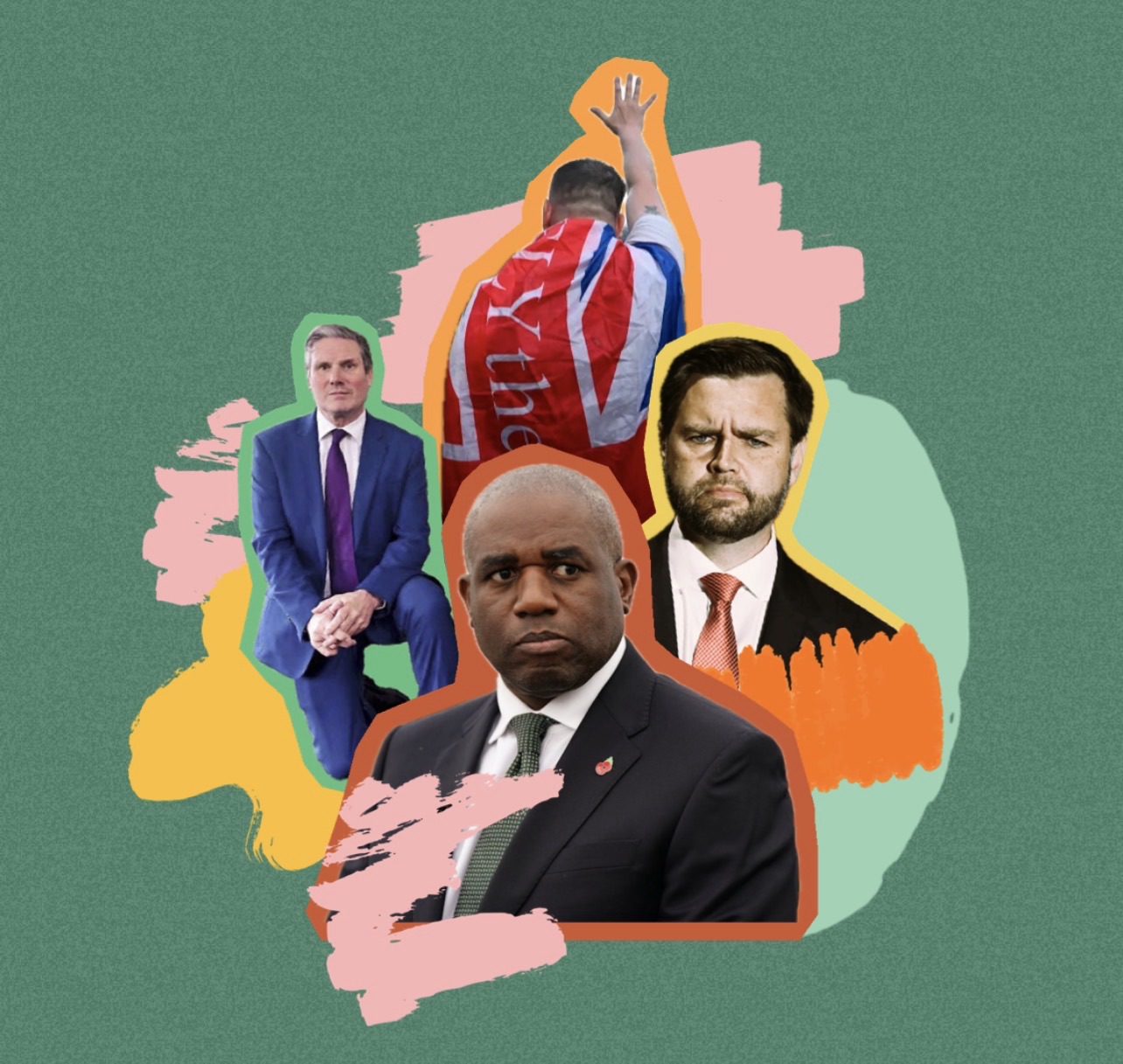
What I would like to focus on, however, is David Lammy’s response to Vance’s comments, as well as his appearance on Trevor Phillips’ talk show. Although I briefly touched on comparisons with George Floyd’s murder in the United States in a previous article, I would like to explore them in greater depth here. The debate is not solely about whether the victims were black or white, but also about how politicians and government officials choose to respond to certain events, and why those differences in response have become such a contentious issue.

“He should still be alive today, and he would be if the last few generations of European elites had stood their ground against the politics of self-hatred and the mass invasion of migrants, many of whom despise the West and the people who love it.”
These were the words posted by JD Vance following the resurgence of the Henry Nowak case. In response, David Lammy reportedly told Vance by phone that his comments were wrong, while Prime Minister Keir Starmer suggested that American politicians were attempting to interfere in British democracy. 2
As a sidenote, Lammy’s relationship with Vance and Donald Trump’s political movement has not always been smooth. When Labour entered government in 2024, several of Lammy’s old tweets resurfaced. Among them were comments describing Trump as “no ally or friend of ours”, saying “you are not welcome in my country and my city.” Lammy dismissed the controversy as old news. 3 By contrast, when Lammy met JD Vance in 2025, the two appeared to get along well, with Lammy even referring to him as a good friend. 4 This history makes Lammy’s public disagreement with Vance over the Nowak case particularly notable.

The debate became more interesting when Lammy appeared on Sunday Morning with Trevor Phillips on the 7th of June. 5 During the interview, Phillips challenged Lammy’s criticism of Reform UK politicians using words such as “fury” and “anger” in response to the Nowak case. Phillips then presented examples of Labour figures using the exact same language following George Floyd’s murder in 2020. Among those expressing anger and outrage at the time were Shabana Mahmood, Sadiq Khan, and Keir Starmer.
This raises a question that has increasingly been asked over the past week. If public anger was considered legitimate following Floyd’s death, why should it be viewed differently in the case of Henry Nowak? Furthermore, why was it acceptable for British politicians to publicly comment on a controversial death in another country, while criticism of events at home is dismissed as politicisation? This is one reason race has become part of the discussion. Many have suggested that Nowak’s case reflects the lack of attention a white victim received compared to a black counterpart. 6 Based on this, I personally believe that the issue is not simply to do with the fact that George Floyd was black and Henry Nowak was white. Rather, they point to the differing reactions from politicians, activists, and institutions. Combined with the controversy surrounding the initial portrayal of Nowak before his death and questions over the response of authorities, these comparisons have only intensified.
From this perspective, Lammy’s position can appear contradictory. Why should politicians be able to determine which deaths are acceptable to become political causes and which are not? If Starmer and other Labour politicians publicly condemned the actions of police officers in the United States following Floyd’s death, was that not also a form of politicisation? I am not arguing that either case should be beyond political discussion. Deaths that raise wider questions about policing, social tensions, or government policy will inevitably become political topics. The issue is whether the same standard is being applied consistently.
This also brings us to a broader question: when is it acceptable for politicians from one country to comment on the affairs of another?
Normally, I would argue that American politicians should be cautious about intervening in British debates. The United Kingdom is a sovereign democracy, and it is reasonable to be concerned when influential foreign figures attempt to shape public opinion. Elon Musk became a prominent voice during the 2024 riots across England and Northern Ireland, while JD Vance and Donald Trump have repeatedly commented on issues such as free speech and democracy in Britain. 7 It is difficult to imagine a British Prime Minister speaking as frequently about the domestic politics of one of the UK’s closest allies.

Keir Starmer and Angela Rayner in 2020
In this case, however, the criticism directed at Vance becomes harder to separate from events in 2020. At the time, Keir Starmer, then Leader of the Opposition, urged Prime Minister Boris Johnson to raise concerns with Donald Trump regarding the handling of George Floyd’s death and the unrest that followed. In this case, however, the criticism directed at Vance becomes harder to separate from events in 2020. At the time, Keir Starmer, then Leader of the Opposition, took the knee and then urged Prime Minister Boris Johnson to raise concerns with Donald Trump regarding the handling of George Floyd’s death and the unrest that followed.
George Floyd’s death was a tragedy. The footage shocked people around the world, myself included, and I remain disgusted by what happened. Likewise, I feel the same sense of horror when watching footage connected to the Nowak case. For that reason, there should not be double standards. Either politicians are entitled to comment on controversial events abroad and should expect others to do the same in return, or they should avoid doing so altogether. What becomes difficult to defend is applying one principle in 2020 and a different one in 2026.
1. The Guardian
4. BBC News
5. The Guardian
6. Medium
7. CNN


Leave a Reply