
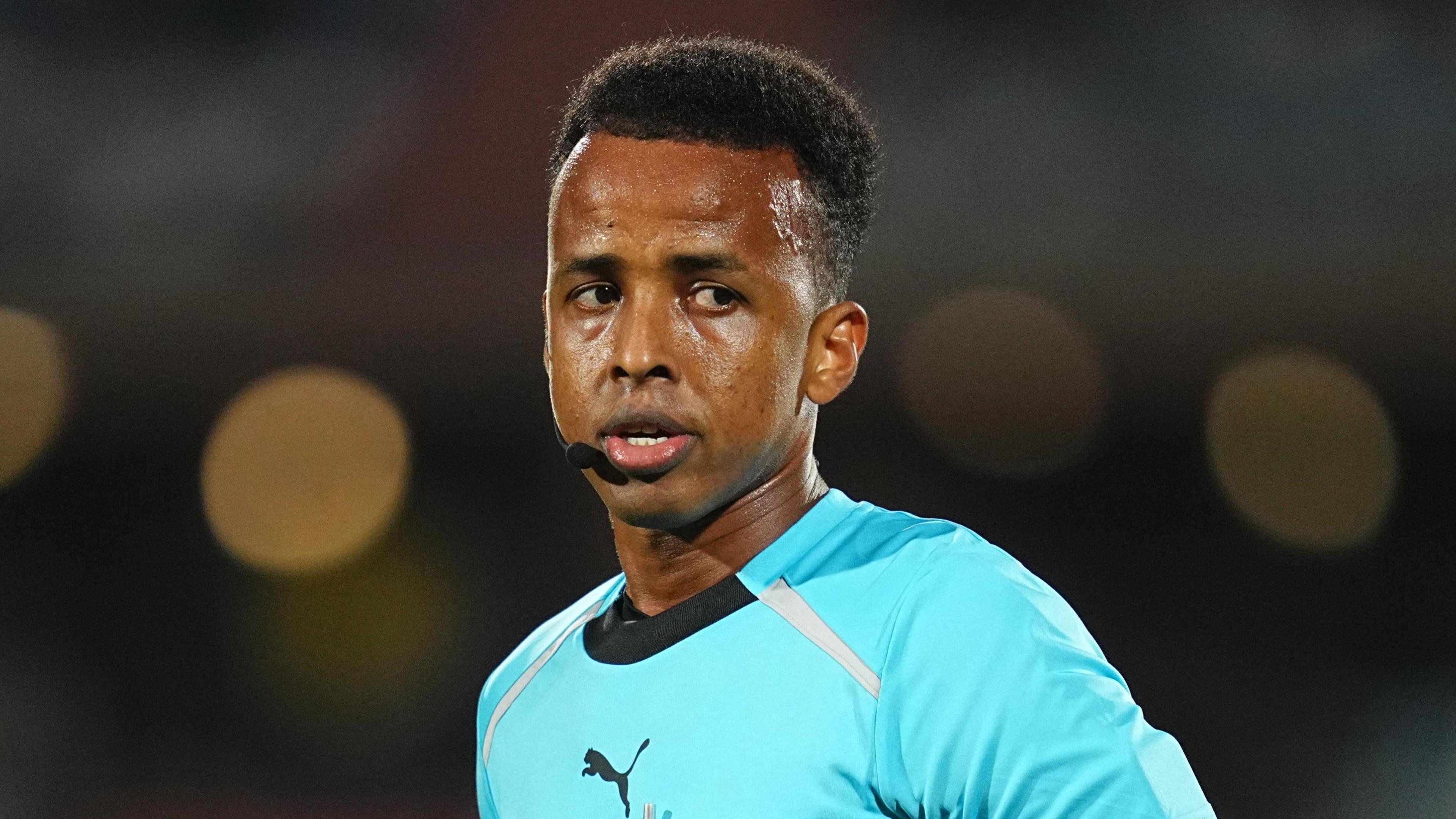
Photo: BBC Sport
Somalian referee Omar Artan was reportedly barred from entering the United States just before he was due to travel there for the World Cup. ¹
Although Artan holds a diplomatic passport, no specific reason has been publicly given for the decision. However, in July 2025, the United States introduced travel restrictions affecting a number of countries, many of them located in Africa, South America, and West Asia. It is therefore reasonable to assume that these restrictions played a role in preventing Artan from obtaining the necessary visa.²
Had he been able to travel, Artan would have become the first Somali referee in World Cup history. Instead, that achievement has been overshadowed by a policy that appears to leave little room for individual circumstances.
The upcoming World Cup in the United States has already raised wider questions about accessibility and fairness. During recent international sporting events, clips circulated online showing differing experiences at U.S. ports of entry. Senegalese and Uzbekistani athletes were subjected to additional searches, including bag inspections and sniffer dogs, while many European teams appeared to pass through with fewer visible checks. ³ South African and Iranian delegations reportedly faced visa delays, while an Iraqi national team member was questioned for several hours upon arrival. ⁴
Whether these incidents were justified on security grounds or not, they have created the perception that some nationalities are being treated differently from others. Notably, no European country currently appears on the U.S. travel restriction list.
Nevertheless, visa restrictions have also affected a number of Western countries too, as a Swedish player reportedly arrived late because of documentation problems. ⁵ The consequences have not been limited to officials and athletes either, as visa issues have also affected supporters worldwide. Most notably, Scottish fans saw travel authorisations revoked shortly before departure, taking away their dreams of seeing Scotland playing the World Cup for the first time in decades. ⁶
All of these events begs an answer for this uncomfortable question: who exactly is this World Cup for? This tournament is supposed to bring together people from every corner of the globe over one common trait: their love for football. Yet many fans, officials, and athletes now face uncertainty before they even reach the stadium. Can it truly be called a “World” Cup if parts of the world are unable to participate on equal terms?
The situation also highlights an apparent contradiction. Somalia remains subject to severe restrictions partly because of instability and security concerns within the country. Yet the United States itself is currently involved in a war with Iran, alongside other major international conflicts and military operations. Whether one agrees with the travel restrictions or not, it appears that the standards being applied appear inconsistent.
The World Cup is supposed to unite people regardless of nationality, ethnicity, religion, or politics. For a few weeks, the focus should be on football rather than borders. Unfortunately, the tournament has not even begun, and controversy already surrounds who is allowed through the gate. The World Cup deserves better.


Leave a Reply