
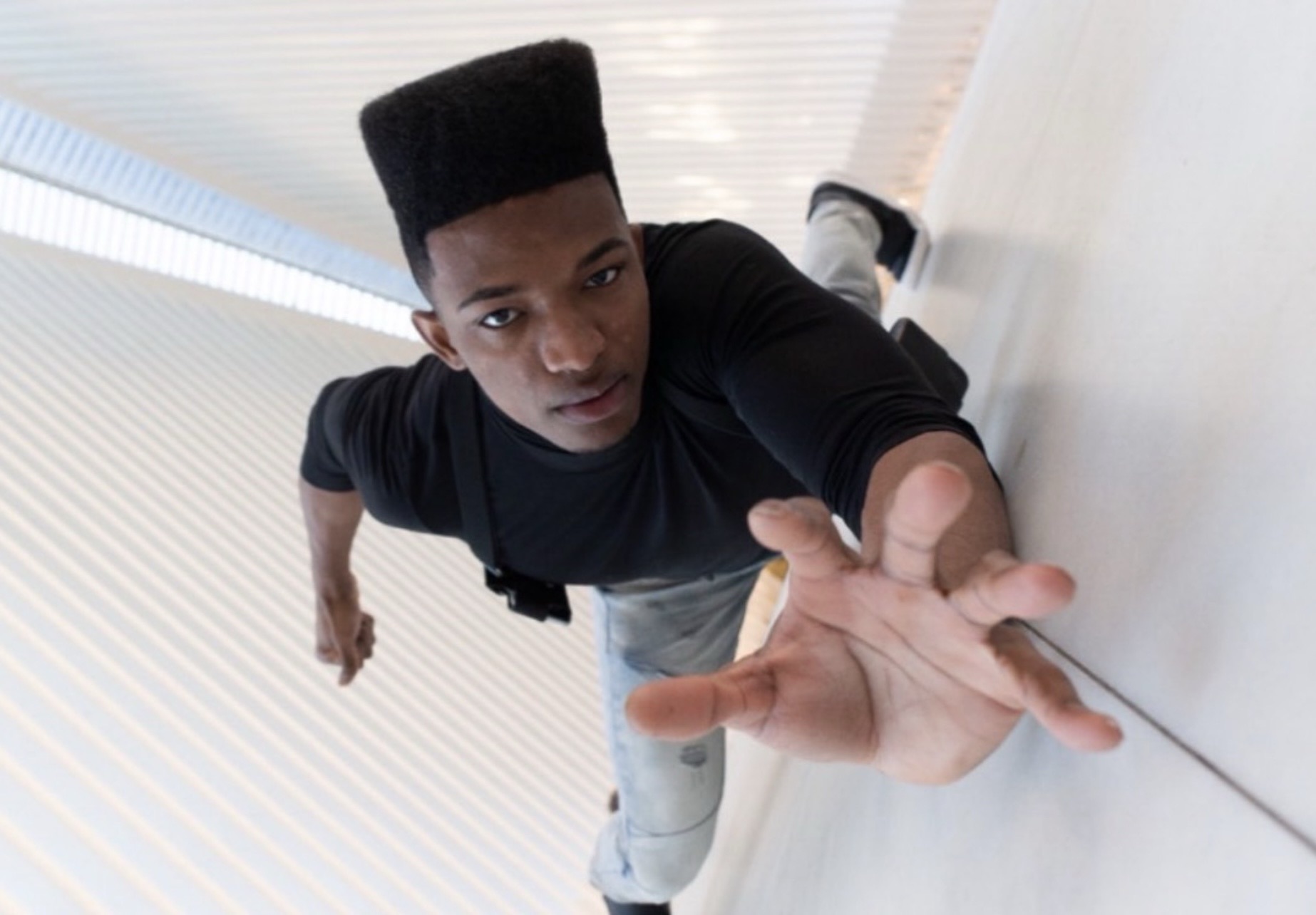
Mental health should not be associated with one gender, as it is a human issue. That said, there are certain aspects of men’s mental health that are often overlooked. Men are frequently told to “man up,” to stop being emotional, to get on with things, and to avoid asking for help. When a man is struggling, especially one known for being funny, confident, or entertaining, his distress can be dismissed as attention-seeking, or as a joke. In this article, I want to discuss a unique mental health challenge faced by people who live in the public eye. Streamers, influencers, celebrities, and online personalities often experience their struggles in front of thousands of viewers. This is the story of Desmond Daniel Amofah, better known as Etika, and how many fans, commentators, and viewers failed to recognise the seriousness of his mental health crisis until it was too late.
Etika was a bright, loud, funny and caring streamer and YouTuber who rose to prominence through his online commentary, reaction videos, engagement with fans, and involvement in meme culture. Most of all, however, he was known for his love of Nintendo’s Super Smash Bros. franchise. The former model and battle rapper began uploading to YouTube in 2012 and had reached 100,000 subscribers by 2015. His hyped reactions to Smash Bros. character reveals went viral multiple times, spawning internet memes and mashups throughout both the Super Smash Bros. for Nintendo 3DS and Wii U reveal cycle and the Super Smash Bros. Ultimate reveal cycle several years later.

One thing Etika regularly did was look out for his fans. During live streams, he would often give advice to younger viewers on life, dating, self-confidence, and striving to do one’s best. He frequently spoke about difficult periods in his own life, including a time when he was homeless while trying to build his online career. For Etika, these experiences were proof that setbacks did not have to define a person’s future. What made Etika stand out was how genuine he felt. He was not simply another face on a screen, but he actively sought to connect with his audience, whom he affectionately called the Joy-Con Boyz, a reference to the Nintendo Switch controllers.
Whilst I could spend much longer discussing Etika’s career and the reasons why so many people admired him, that is not the focus of this article. Instead, I would like to examine how mental health, isolation, and internet culture played a role in the final year of Desmond Amofah’s life.

In October 2018, Etika posted a series of worrying messages on Twitter. Some appeared to hint at suicidal thoughts, whilst others simply seemed completely bizarre to anyone reading them. Around the same time, he reportedly uploaded animated pornography to his YouTube channel in an apparent attempt to have it terminated, despite the account having amassed around 800,000 subscribers. Shortly afterwards, his ex-girlfriend and fellow streamer Alex Pika informed fans that he had been admitted to a mental health facility and would be released soon. Following his release, Etika appeared to return to normal. At least, that was how it looked to those of us watching from behind a screen. As fans, we only see what a creator chooses to show us, and have no way of knowing what is happening behind the scenes. Later that year he would go on to host what many fans remember as an iconic Christmas stream, giving the impression that he had recovered from the difficulties that had led to his hospitalisation.
During the early months of 2019, Etika experienced a series of highly publicised mental breakdowns. At this point, as a fan I feel it is more appropriate to refer to him by his real name, Desmond. What viewers were witnessing no longer felt like the energetic online personality they had come to know, but rather a man clearly struggling in front of a very large audience. In April, Desmond began referring to himself as the “Anti-Christ” and posted increasingly concerning messages on Twitter, including statements about it being his “turn to die.” He also posted various slurs and once again had his YouTube channel terminated after uploading pornography. By this stage, many fans and online commentators were struggling to understand what he was trying to achieve or communicate through his actions. Friends, fellow YouTubers, and other content creators attempted to reach out to him publicly, but Desmond blocked many of them. At this point, many fans started to turn on him, as they dismissed his behaviour and started spamming clown emojis on any live stream he did. This behaviour would reach its most alarming point on the 29th of April that year.

Desmond live streamed himself on Instagram, a broadcast that 14-year old me was watching as it happened. During the stream, which attracted close to 20,000 viewers, a concerned fan reportedly contacted the police due to his increasingly alarming behaviour. As officers arrived outside his apartment, Desmond could be seen shouting from his window, repeatedly declaring that “the revolution will not be televised.” He later spoke to the officers through his front door before eventually allowing them inside. The camera remained on the floor as police entered the apartment, and fans outside his apartment had watched as Desmond was carried away on a stretcher and taken to hospital. Some of the people recording footage of Desmond being taken away could be heard calling out his name. Rather than treating the situation as a mental health crisis, parts of the crowd appeared to view it as a spectacle and treat him as a “legend”, cheering and filming as events unfolded.
Despite the seriousness of what had taken place, many people online continued to mock him. By this point, parts of his fanbase had become convinced that the person they were watching was no longer the Etika they once knew. In the eyes of many viewers, “Etika” had become more of a character than a person, particularly as his streams grew increasingly erratic and difficult to understand.
In one stream, Desmond appeared topless while speaking about a mysterious power that he believed was going to take over the world. In the corner of the video, the live chat can be seen filling with messages from viewers spamming clown emojis. What they were witnessing was a man experiencing a very public mental breakdown. He was speaking incoherently, clearly distressed, and seemingly alone with nobody present to calm him down or challenge the ideas he was expressing. The audience’s reaction was divided. Some viewers were genuinely concerned and urged him to seek professional help. Others believed he was faking his behaviour for attention and labelled him a clown. Some simply found the situation entertaining, laughing as they waited to see what bizarre thing he might say next. There were also those who had initially supported him, but after previous incidents and suicide scares had become convinced that his behaviour was merely a publicity stunt.
During this period, Desmond was interviewed by Daniel Keem, or Keemstar, the host of the YouTube news channel DramaAlert. Throughout the interview, Desmond spoke about life being a simulation and made a number of unusual claims that reflected the state of mind he appeared to be in at the time. At one point, after Desmond discussed the idea of life being a simulation, Keemstar responded by asking, “if life were a simulation, then why live? Just jump off a cliff?” The remark was widely criticised by viewers, many of whom felt that it egged on the situation and encouraged further shocking statements from a man who was clearly struggling. Looking back, refusing to platform the interview altogether, or encouraging Desmond to seek professional help instead, would have been the more responsible course of action. Just a few days later, on the 1st of May, Desmond was detained after pushing a police officer.
On the 2nd of June, Desmond tweeted, “When should I have my next mental breakdown y’all?” One user jokingly replied, “June 19th.” Etika reacted to this Tweet, and neither the user nor anyone else reading the conversation could have known the significance that date would later take on. Seventeen days later, on the 19th of June, 2019, Desmond uploaded his final video.

“I’m sorry ya’ll. I’m sorry I betrayed your trust.”
Throughout the video, Desmond slowly walks through New York City in near silence. Much of the time, he stares beyond the phone recording him, only occasionally looking down at the screen, seemingly lost in thought.
“I’ve made my bed, and now I’ve got to sleep in it.”
These heartbreaking words came from a man who appeared to believe that he had pushed those around him away beyond the point of reconciliation. By this stage, Desmond had spent months watching online discussions about himself, many of which made fun of his behaviour or dismissed his struggles as attention-seeking. It is difficult not to wonder what effect this had on him. Having been repeatedly told that he was manipulating others for sympathy, Desmond may have begun to internalise some of those accusations himself.
At one point in the video, Desmond laughs as he talks about becoming emotional over the fact that he would never get to see the continuation of one of his favourite anime series, Attack on Titan. He ends the video with what may have been his final public words: “Two wrongs don’t make a right, but I mean, y’know.”
With that, he went missing. For the next week, I found myself searching Etika’s name on Google every few hours, desperate to find out whether he really was missing. During school break times, I would head to a computer room and search for updates. On the 25th, when I saw that the New York Police Department had confirmed his death, I cried. Desmond, or Etika, was not just a YouTuber to me. He made me feel that it was okay to have nerdy interests. He encouraged me to embrace my love of video games and online culture. During a period of my teenage years that often felt isolated, he was an important figure and role model.
I was also reminded of how, just three months before his death, he had reposted one of my Instagram posts to his story. Around that time, Desmond had started using the hashtag “JoyCon Gods,” and as a huge fan of his, I was one of the first people using it in an attempt to get his attention. My post mentioned his past as a model, which he reposted with the caption, “sometimes I miss those days,” accompanied by a joking emoji. It was only a small interaction, but the fact that it had occurred months before his passing did not sit right with me.
So, who is to blame for Desmond’s death?
There is no simple answer. At the end of the day, it was Desmond’s choice not to get professional help. He repeatedly pushed away friends who were trying to help him, often doing so publicly. However, acknowledging that reality does not mean dismissing people like Desmond as simply “doing it to themselves.” Mental illness is rarely that straightforward. Had more people taken his behaviour seriously instead of treating it as entertainment, things may have unfolded differently. Had more fans encouraged him to step away from the internet and seek professional help rather than feeding into the spectacle, perhaps there would have been a different outcome. Had those who consume online drama paused for a moment and recognised that this was no longer amusing content, but a real person visibly struggling, perhaps Desmond might still be here today.
This is partly why his final apology, “I’m sorry I betrayed your trust,” is so heartbreaking. It is as if he may have blamed himself for what was happening around him, even as he was losing control of his mental state.
Personally I feel that by the end, Desmond was chasing Etika. As his mental health deteriorated, the line between Desmond and Etika appeared to blur. He may have felt trapped by the fact that “Etika” was slowly becoming a character instead of just a nickname he went by, and many of his online outbursts seemed to reflect that struggle.
If there is one lesson to take from Desmond’s story, it is the role that social media can play in mental health. Online comments, meme culture, the way platforms reward engagement, and the way fans interact with internet personalities all have consequences. We must also ask difficult questions about how society responds to mental illness when it unfolds publicly.
This applies to everyone, but it is particularly relevant for men. Men are often expected to be strong, funny, entertaining, and emotionally resilient. When they openly struggle, their pain can be dismissed as attention-seeking, manipulation, or performance. That attitude ought to change.
Towards the end of his life, Desmond frequently posted about the number “999,” which he considered an angel number. He also posed in photographs with an “OK” hand sign over one eye to represent it. For many fans, those images have become symbols of the darkness that surrounded his final months. But that is not how I choose to remember him.
I remember the JoyCon Boyz. I remember his infectious enthusiasm for Nintendo, Super Smash Bros., anime, and internet culture. I remember the excitement of watching his reactions and the sense of community he created around them. Most importantly, I remember how much he cared about his audience. Despite his fame, he always seemed genuinely grateful for his fans, their support, and the opportunities they had given him. Seven years on from today, on the 19th of June, 2026, that is the legacy that remains.
Rest in peace, Desmond “Etika” Amofah.
JoyCon Boyz forever.

“Take care of yourselves, and of course, as usual, please have yourself a damn good one” – Desmond “Etika” Amofah


Leave a Reply