
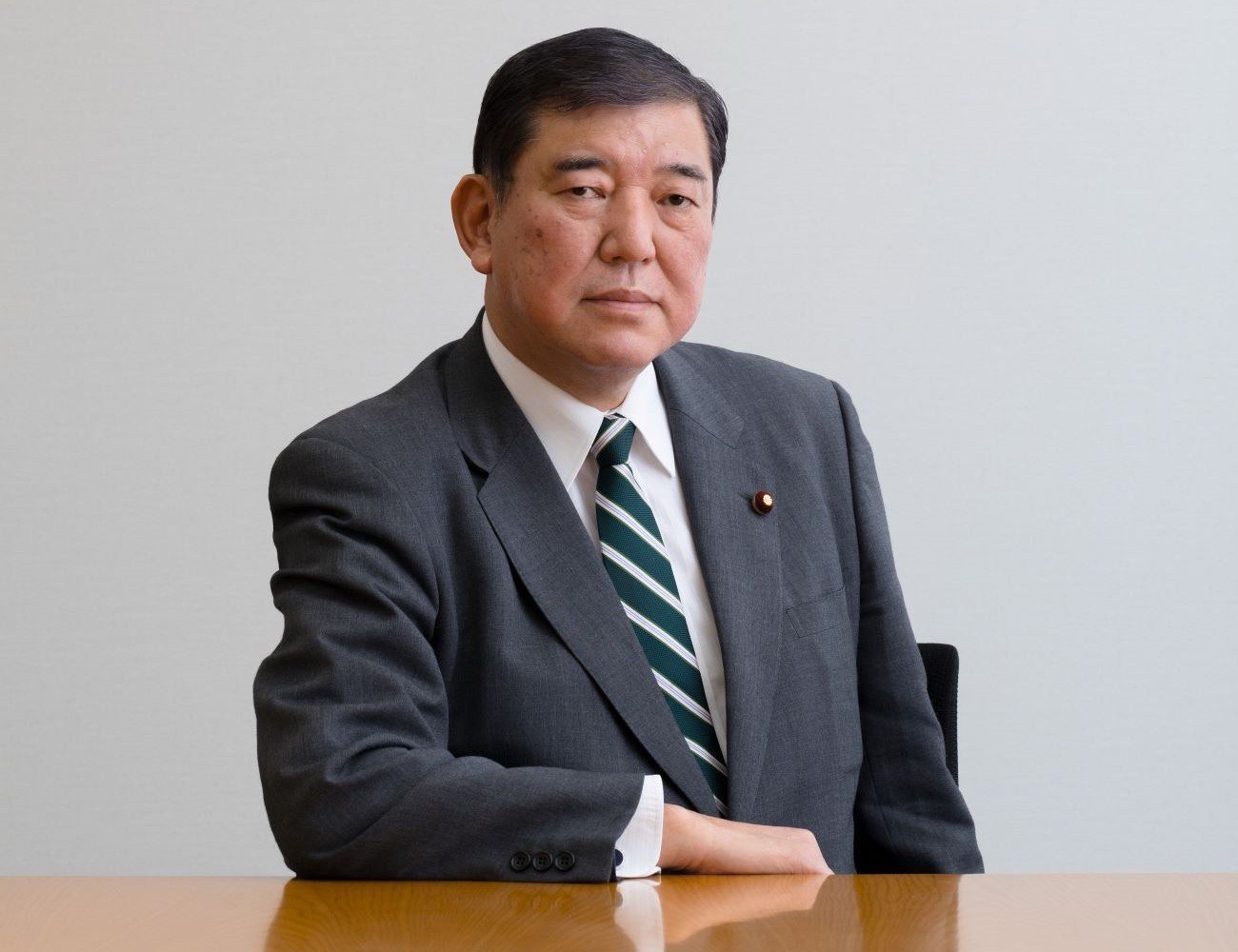
Photo: Diamond Online
Shigeru Ishiba served as Prime Minister of Japan from October 2024 to October 2025. A senior figure within the Liberal Democratic Party, Ishiba had previously held multiple cabinet positions, including Minister of Defence and Secretary General of the LDP. Before his election in 2024, Ishiba had unsuccessfully contested the LDP presidency on four occasions, winning on his fifth attempt. During his brief tenure, Ishiba’s administration faced growing political pressure, particularly following the July 2025 House of Councillors election, in which the ruling coalition failed to retain its majority. In this article, I aim to provide the reader with a simplified overview of what defined the former Prime Minister’s premiership, and how it affected the politics and society of Japan. I will go through some highlights in chronological order.
Ishiba, who used to work at a bank, was elected to the House of Representatives in 1986 as an LDP candidate. He left the party to join two opposition groups at separate times between 1993 to 1997, when he rejoined the LDP and has remained a member ever since.1 Ishiba is seen as a moderate, progressive, reform-minded figure compared to his peers within his party, an example of this being how he publicly criticised former Prime Minister Shinzo Abe’s leadership, particularly regarding governance style and concentration of power within the executive.
In August 2024, Prime Minister Fumio Kishida announced that he would not seek re-election as President of the LDP amid high profile scandals that led to his declining popularity. This triggered an LDP leadership election, where Shigeru Ishiba and fellow LDP veteran Sanae Takaichi (who later became Prime Minister) were the two runner ups. Ishiba won by approximately 5 percentage points.2 It was just eight days after his inauguration when he declared a snap general election in October, but we will come back to that in a moment.

Photo: JapanGov
Following Ishiba’s inauguration, his past remarks expressing regret over Japan’s actions during the Second World War, which greatly contrasts with the views of other LDP figures, were welcome positively by some South Korean media and commentators. The South Korean newspaper Hankyoreh labelled him as “dovish” when it came to historical issues, especially compared to his rival Takaichi.3 However, within his first week as prime minister, Ishiba disappointed many for his approach to Yasukuni Shrine. The controversial Shinto shrine that honours those who died in wars for Japan, including Class A war criminals, had been the centre of controversy every time a new Japanese Prime Minister chooses to visit it, or boycott it. Like his immediate predecessors Yoshihide Suga and Fumio Kishida, Ishiba chose not to visit the shrine in person, but instead sent ritual offerings. One can gather that Ishiba chose to not visit the shrine to please the other Asian nations, as well as send an honour to please his piers within the LDP and the general Japanese public. This sparked criticism from multiple directions however, including from observers in China and South Korea who felt let down despite Ishiba seeming promising, and fellow LDP peers who felt it was not enough. This shows just how sensitive the issue is to this day, and this episode illustrated how even carefully calibrated positions can fail to satisfy competing domestic and international expectations.
Shigeru Ishiba dissolved the House of Representatives and called a snap general election just eight days into his tenure. As previously stated, scandals under Kishida’s government had plagued the Liberal Democratic Party and its coalition partner, Komeito. As a result, the governing coalition lost its majority in the 465-seat Lower House for the first time in fifteen years, with the LDP suffering one of its worst results. This meant the that the major opposition party’s gained from this, but despite the possibility of a seiken kōtai, meaning a transfer of government leadership to the opposition, no single alternative coalition emerged strong enough to claim a clear mandate. As a result, Ishiba was re-elected Prime Minister in the Diet, making the first Ishiba cabinet one of the shortest cabinets in Post-War Japan. Had he resigned at that point, and had the opposition succeeded in uniting behind a candidate, Ishiba would have been the shortest Prime Minister in Japanese history. Some critics, including a number of Liberal Democratic Party lawmakers and executives, openly argued that Ishiba should resign following the election setbacks. Ishiba’s decision to remain in office was described as not justifiable and they urged him to take responsibility for the defeats rather than cling to the leadership.4

Photo: Reuters
Within his first month Ishiba attracted attention over his comments supporting the idea of an “Asian NATO”.5 Whilst he did not formally propose this, he argued for stronger multilateral security framework in Asia, as he felt that existing security arrangements in the region were not good enough to prevent conflict. Critics within Japan expressed concern that the idea lacked practical details, and Former Prime Minister Yukio Hatoyama of the Democratic Party stated that it could drag Japan into unwanted military obligations.6
Amongst the younger generation and those present on social media, Ishiba’s time in office was marked by a series of minor but highly visible political gaffes that attracted attention online. Footage of the way he ate an onigiri during a public appearance went viral on social media and was covered on the news.7 It turned into a viral internet meme, and led to even merchandise being made of the incident. Critics reported on how unprofessional for a world leader it made Ishiba seem. He was also criticised during the 2024 G20 summit, where he was seen failing to stand up when greeting foreign leaders such as Justin Trudeau, as well as having his arms crossed when sat down.8 While none of these incidents carried direct policy consequences, they contributed to an image problem that followed Ishiba throughout his one year in power. In contrast, when Sanae Takaichi later became prime minister, media coverage frequently highlighted her formal conduct and ability to get along with foreign leaders, with comments drawing comparisons between her public manners and those of her predecessor appearing following the 47th ASEAN summit.9
Ishiba was also the first Japanese Prime Minister to have his tenure overlap with Donald Trump’s presidency since Shinzo Abe. This meant great pressure, since Abe and Trump’s “friendship” was seen as very important for Japan-U.S. relations, that some observers felt was lacking during the Kishida-Biden era. Trump’s renewed emphasis on protectionism and “America First” policies revived concerns in Japan about the possible reintroduction of tariffs. Ishiba prioritised stability in the U.S.–Japan alliance over direct confrontation; rather than publicly criticising Washington’s trade measures, his government pursued behind-the-scenes negotiations aimed at securing exemptions. Ishiba saw this as necessary to protect Japan’s economic interests while avoiding escalation with its most important security partner.10
Ishiba’s government was also briefly shaken by an incident involving the use of government gift certificates. While the amounts involved were relatively small, the way the certificates were distributed raised concerns about judgment and transparency. The incident added to existing public frustration with the LDP and fed the impression of a government struggling to regain trust.11
During the final months of his premiership, Ishiba announced JIAC’s proposed Africa “home town” project, an initiative intended to deepen Japan’s engagement with African countries through development cooperation and local partnerships. Under the plan, citizens from Mozambique were to be sent to Ehime Prefecture, Nigerians to Chiba, Ghanaians to Niigata, and Tanzanians to Yamagata. The proposal was met with criticism, particularly from local residents in the affected areas, who raised concerns over costs and the lack of prior consultation. Protests followed, and Ishiba ultimately decided to scrap the project altogether. The controversy added to the political pressure facing his administration and came to symbolise the weakened authority of his government in its final phase.12

Photo: The Japan Times
Shigeru Ishiba, whose approval rate fell to 20.9% by May 2025, resigned from office amid mounting political pressure.13 In September, days before announcing his resignation, Shinjiro Koizumi (who would later lose the subsequent LDP leadership race to Sanae Takaichi) and former Prime Minister Suga Yoshihide advised Ishiba to step down.14 Declining public support and electoral setbacks made it difficult for his administration to continue. Ishiba’s government presided over one of the sharpest declines in support for the Liberal Democratic Party since its return to power in 2012. Overall, Ishiba’s short time in office offers an insight into the changing nature of Japanese politics, highlighting how even veteran politicians can struggle to maintain power in an era of weakening party dominance and growing public fatigue with the LDP.
10 Prime Minister’s Office of Japan
14 Nikkei



Leave a Reply