

I remember virtually everything about the 8th of July, 2022.
School had ended early. As I stepped out of class around 11:30 a.m., my phone buzzed with a news notification: “Abe has collapsed.” The Japanese word used here (倒れた, taoreta) made me assume the former prime minister had simply fainted during a speech. Minutes later another alert appeared: he had been shot while campaigning in Nara City.
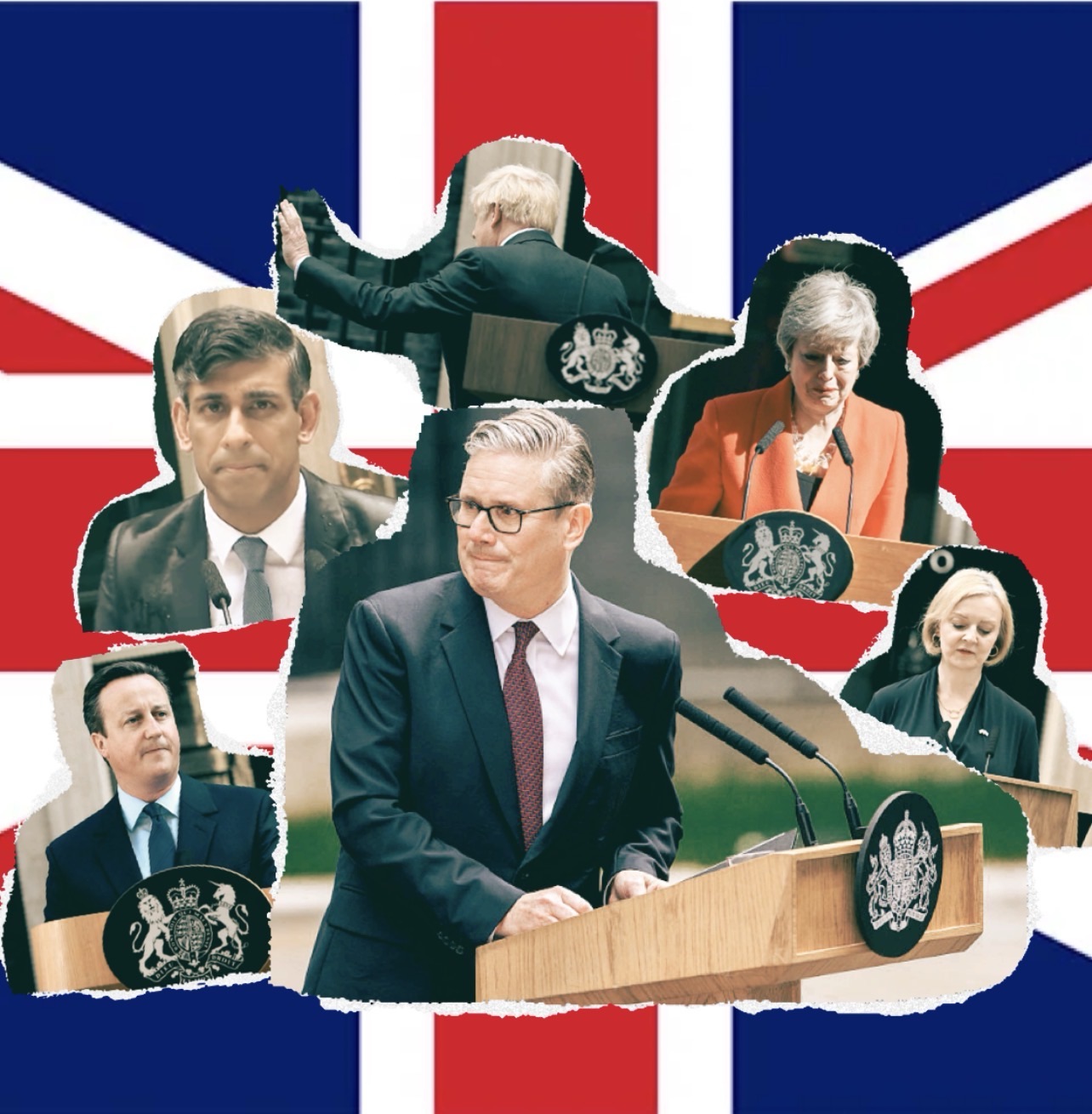
I couldn’t believe it. Abe? Shot? In Japan? And in Nara, of all places, the city I’d visited on holiday the year before? The previous night (Japan time), Boris Johnson had just announced his resignation as Prime Minister of the UK. What should have been massive news to me was immediately overshadowed by this.
The journey home that day felt surreal. The elderly passengers around me chatted quietly, and assuming they had no phone to look at, they seemed unaware that anything extraordinary had just happened. Knowing what I had just read while everyone else carried on with their day made the journey feel strangely detached from reality.
When I got home, the television was already on. My family and I spent the rest of the afternoon watching the news, hoping for positive updates. We watched for at least five hours. To this day I remember the exact set of commercials that kept playing, as they seemed to loop for hours on end. At 5 p.m., the announcement finally came. Shinzo Abe had died from his injuries. Japan had witnessed its first assassination of a former Prime Minister in the post-war era.

Photo: South China Morning Post
Later that evening, I went to cram school. Once again, everything felt strangely disconnected from reality. Some of my teachers seemed completely unaware of what had happened. It felt as though I was watching history unfold while ordinary life continued around me, and that I was in a complete dreamlike state.
Amid the constant news coverage, one video kept resurfacing. Television stations replayed it throughout the weeks following the incident, and it quickly spread across social media. It showed Abe quietly sitting at a piano, playing Hana wa Saku (“Flowers Will Bloom”).
The recording had originally been made as a message to an orchestral event commemorating the tenth anniversary of the Great East Japan Earthquake and Fukushima nuclear disaster on the 11th of March, 2021. Hana wa Saku was produced by NHK, with music by Yoko Kanno and lyrics by Shunji Iwai. Released as part of a charity project following the 2011 disaster, its goal was to bring hope and support amidst the reconstruction for those affected.
For months afterwards, that melody stayed with me.
Two months later, I watched Abe’s state funeral live on my phone while walking home from school. At one of my local stations, I passed a group of elderly protesters holding banners opposing the funeral, arguing that public money should not be used to fund it. The state funeral was highly controversial, with one man even self-immolating in protest. As I walked past, the protesters repeatedly chanted “Kokusō hantai!” (“Oppose the state funeral!”) while the ceremony unfolded live on my phone. The timing felt oddly ironic.
During the funeral, a memorial video reflected on Abe’s life and political career. It opened with the same footage of him playing Hana wa Saku, and the melody accompanied much of the tribute as world leaders, former leaders, members of the Imperial Family, and government officials looked on.
Political views aside, I found myself feeling emotional. Only in the previous year had I begun taking an interest in politics, yet Abe had been a constant throughout my life in Japan. For most of my time living here, he was the face of Japanese politics. Whether people admired him or criticised him, his presence seemed permanent.
In many ways, he represented Japan to me in much the same way that Queen Elizabeth II represented the United Kingdom. They held very different roles, of course, but both had been enduring public figures throughout my childhood. At the time, I held few strong political views about either of them, yet they had come to symbolise the countries I called home. Moments such as Abe’s appearance as Super Mario during the Rio 2016 Olympic handover ceremony reinforced that image. I even remember watching him in person deliver a speech when he visited my hometown in 2014.

Photo: ABC News
Four years later, I still remember that day vividly. The odd thing is that, sometimes, it still feels as though Abe is here. As one of Japan’s most prominent post-war politicians, countless books continue to be written about him since 2022, and his name continues to come up on television, during political debates, and in everyday conversation. Having been assassinated less than two years after stepping down as Prime Minister, discussions of his policies, public reception, and political legacy remain current. In Japan, people don’t only mention Abe in the context of his assassination.
Whatever history ultimately decides about Shinzo Abe’s legacy, the 8th of July 2022 remains one of those rare days that divides time into a clear “before” and “after”, a day I suspect many people in Japan, myself included, will never completely forget.
I discuss Shinzo Abe’s assassination, the shooter’s motive, and its aftermath in more detail in a previous article linked here. I’ll end this piece with the original video of Abe playing “Hana wa Saku”, which is included below.


Leave a Reply