

Photo: FNN Prime Online
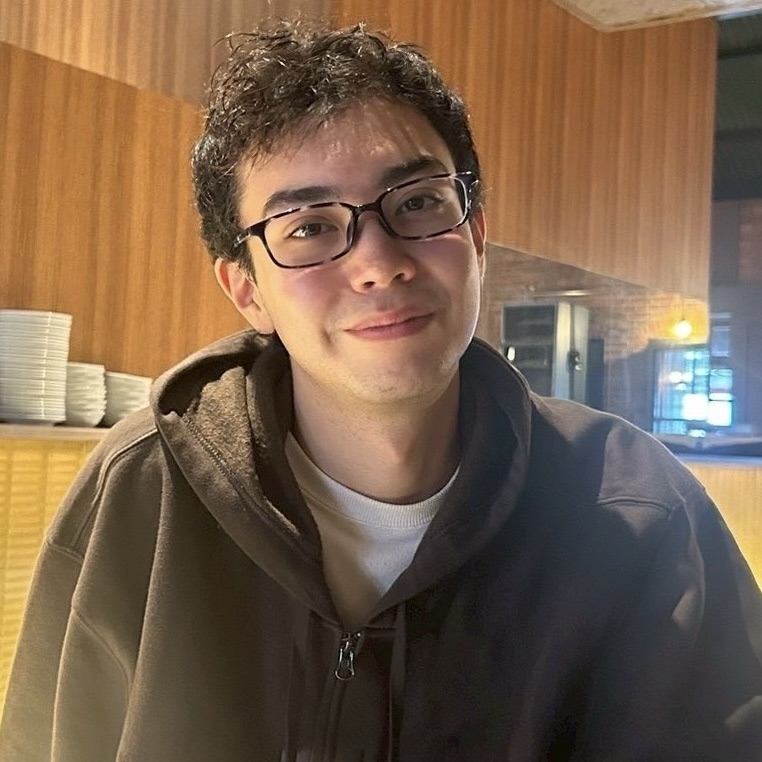
If you have ever lived in Japan or spent a significant amount of time there, chances are you have seen this man’s face. You may not have known his name or his story, but his faint smirk stared out from wanted posters in police stations across the country for decades. Growing up in Japan, I always found his expression strangely captivating. Among all the faces on those posters, his was the only one that stuck with me. The glasses, the slight smile, the unusual angle that did not even look like a mugshot, at least not like the others. That man was Satoshi Kirishima. This is the story of one of Japan’s most infamous fugitives, how he evaded capture for nearly half a century, and how he finally revealed his identity on his deathbed. Stories like this rarely receive much attention outside Japan, despite their significance.
Satoshi Kirishima was born in 1954 in Hiroshima and later moved to the Kantō region to attend Meiji Gakuin University, the same university I attend today. It was there that he became acquainted with members of the East Asia Anti-Japan Armed Front, a far-left militant group active in the 1970s.¹
The group subscribed to a radical ideology often translated as “anti-Japaneseism” (han-nichi=anti-Japan, boukoku=ruined country, Ron=theory). This belief system, rooted in the New Left movements of the time, argued that Japan as a state, and even Japanese identity itself, had been irreparably shaped by imperialism since the Meiji era. Unlike simple anti-Japanese sentiment, which is based on hostility toward Japanese people, this ideology framed Japan and the Imperial family as something that needed to be destructed in order for the nation itself to be “redeemed.” The East Asia Anti-Japan Armed Front were very pro-Ainu and were unfavourable towards Japanese discrimination towards minorities. ²
On the 18th of April, 1975, a homemade time bomb was planted at the entrance of the Korea Industrial and Economic Research Institute in Ginza, Tokyo, and was detonated the following day. There were no casualties, but it caused partial damage to the building. The bomb was based on instructions published in Hara Hara Tokei, an underground publication produced by the group. Kirishima was found, through accomplices’ criminal trials, to have been involved, either by planning or directly carrying out, in several other bombing incidents ranging from 1974 to 1975. ³
Following the arrest of seven key members of the East Asia Anti-Japan Armed Front a month later, Kirishima went into hiding. A key to his residence found in one of the group member’s possession revealed his existence to the police, who had not previously identified him. This was the start of Kirishima’s half a century long hiding. No one had heard from him since May 1975.

Photo: Okinawa Times Plus
The National Police Agency designated Kirishima as one of Japan’s ten most wanted fugitives, placing him alongside murderers and other terrorists. In 1987, the Tokyo Metropolitan Police printed and distributed seven million wanted posters featuring ten suspects, including Kirishima. The distribution of these posters featuring Kirishima’s almost iconic smirk went widespread and became recognisable. Many people parodied the facial expression, with many memes online of people copying his hair and glasses, posing in front of the wanted signs.

Examples of parodies people have posted onto social media
Then, on the 25th of January, 2024, the story took an unexpected turn. A man using the name “Hiroshi Uchida” was found near his residence, suffering from severe stomach pain. He was taken by ambulance to a hospital in Kamakura, where he was diagnosed with terminal stomach cancer. The man had no form of identification, including no driver’s license, no health insurance card, and no bank account. At the hospital, he made a final request: he wanted to die under his real name. He claimed that he was Satoshi Kirishima.⁴
When police were called, he provided details about the bombings that only a perpetrator would have known. A DNA test was conducted. Shortly after, the man died. The results confirmed that after 49 years on the run, the man who had just died, was in fact, Satoshi Kirishima.
In the aftermath, more details about his hidden life emerged. For decades, Kirishima had lived in Fujisawa, Kanagawa, under the alias “Hiroshi Uchida.” He worked at a construction company as a live-in laborer and was paid entirely in cash. Without official identification, he had effectively erased himself from the system. Locals knew him as “Uchii,” a quiet man who occasionally visited music bars and enjoyed dancing, reportedly a fan of artists like James Brown. There’s even a clip of him dancing in one of these bars that was used a lot during news coverage. He lived modestly, alone in a small room, avoiding hospitals and dentists to prevent leaving records. By the end of his life, he had lost many of his teeth, a consequence of avoiding medical care for decades.⁵
During questioning, he denied involvement in the Korea Industrial and Economic Research Institute bombing, which was the case that had originally placed him on the wanted list, claiming instead that he had only participated in separate bombings targeting the Hazama Corporation.
A few weeks after the news broke, a friend and I visited the street where Kirishima had lived, as we were both very familiar with Fujisawa. The area was sealed off, with signs prohibiting entry and photography. The vending machines that he had collapsed next to were there in front of us. It felt surreal. For years as a child, I had seen his face on posters, wondering who he was and where he might be. All along, he had been living relatively close by, blending into ordinary life. It was a strange reminder that the people behind those images are not distant figures. They may be somewhere nearby, living unnoticed.

Satoshi Kirishima and Kin Shigeyuki being removed from the wanted posters. Photo by Kobe Shinbun NEXT
In a strange twist, just days after Kirishima’s death, Chinese fugitive Kin Shigeyuki who was wanted for shooting a man in an attempted murder case in 2020, was caught and arrested. ⁵ Some speculated that renewed public attention on wanted posters, sparked by Kirishima’s case, helped lead to his capture. People recognised him as “the man next to Kirishima” on those same posters.⁶ ⁷
Kirishima’s story is unsettling not just because of the crimes, but because of what followed. He managed to live an ordinary life in plain sight for nearly five decades, supported by anonymity, cash payments, and the absence of documentation. In the end, he revealed himself knowing that he successfully lived a life unnoticed by the police. In 2025, two films about Kirishima were released, reflecting how deeply his case had embedded itself in Japan’s public memory, and just how bizarre the conclusion was. Slowly, his face disappeared from posters across Japan, as the former terrorist, now a quiet music lover, lived out the rest of his days.
¹ BBC News


Leave a Reply