
Photo: Peakpx
In today’s article, I want to touch on a few themes that will likely recur on my website: global music, global hip-hop, and the artists who have shaped my understanding of cultures beyond my own. This is my story with folkhop.
Hip-hop has always been my favourite genre. From the beats to the lyricism to the endless sub-genres, tracking artists, old and new, has been a hobby of mine for years. What might be surprising is that hip-hop was also one of my main gateways into global culture and news. When I was sixteen, during the COVID-19 pandemic, I began listening to music from all over the world, every continent, any language, any culture. Since I was already deep into hip-hop, I naturally started searching for rappers from Africa, Asia, Europe – everywhere. Because hip-hop is often political and outspoken, this quickly led me into global news, as artists reflected the social issues of their regions. That is a different story in itself. At this point around 2021, I had listened to music from India, genres such as Hindustani classical music, khayal and bhangra, but I had yet to listen to hip-hop from there. That was until 2022.

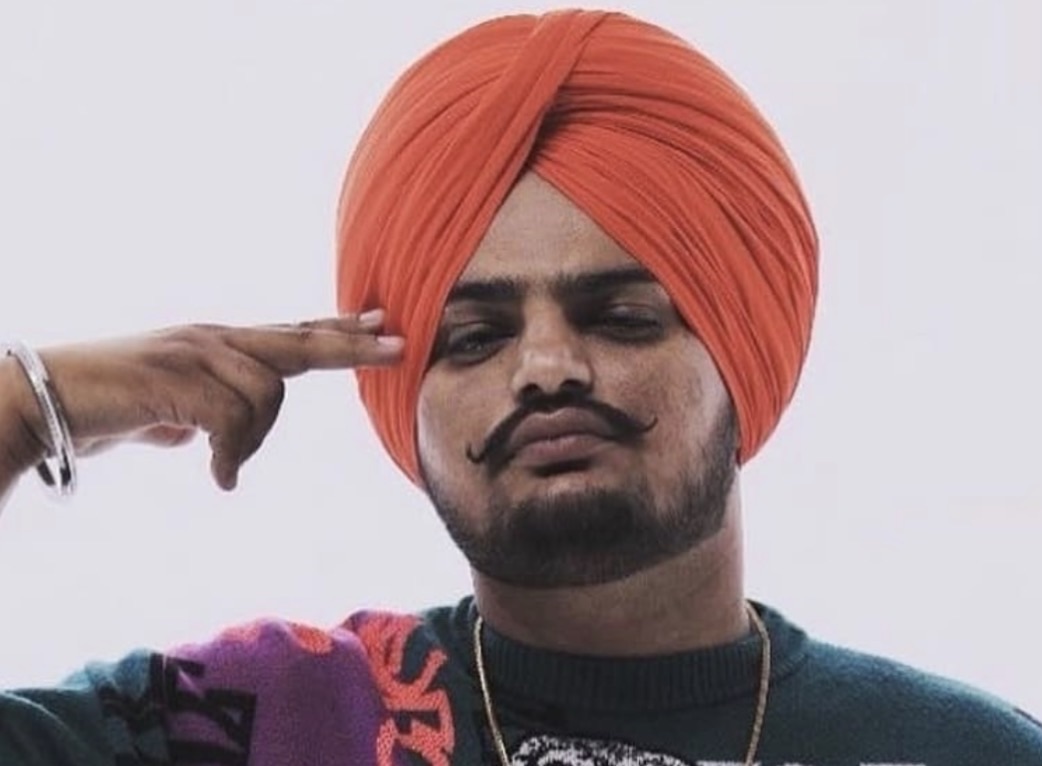
Photo: Sidhu Moose Wala’s Instagram
On the 29th of May that year, news broke that Sidhu Moose Wala had been assassinated. I had no idea who this man was, but I learned that he was a rapper from the northwestern Punjab region in India. From that moment, I began to research about Sidhu Moose Wala for weeks, months even, as I went through his discography. What struck me immediately was how familiar his music sounded. There was a clear resemblance to bhangra, but layered with hip-hop. Bhangra itself is a traditional Punjabi folk music style, originally tied to harvest celebrations. Musically, it is driven by energetic, syncopated rhythms, most notably from the dhol drum, which creates a strong, bouncing groove. Melodies often follow repetitive, catchy phrasing, designed for dance, with call-and-response elements and bright, high-register vocals. Sidhu’s songs, however, seemed to merge bhangra with hip-hop, as the beats had resembled the snare/bass heaviness you get with rap songs. These reminded me of the popular trap and drill sub-genres of hip-hop. Interesting, he had a very rhythmic vocal delivery. What I was hearing in Sidhu’s music was a fusion of these structures: traditional Punjabi rhythmic patterns sitting on top of modern hip-hop production. His vocals moved between rapping and melodic singing, often within the same phrase. I learned that this genre is known as folk hop.
Folkhop is a genre that blends Punjabi folk elements with hip-hop’s beat structure and lyrical flow. While rooted in Punjab, its development has been heavily shaped by the Punjabi diaspora, particularly in the UK and Canada. Combining the catchy folk rhythms and the art of MCing, I instantly became hooked onto this form of hip-hop that most diehard rap fans I have met have never heard of.
Back to Sidhu Moose Wala. At the time of his death, Sidhu was one of the most successful musicians in India, with massive streaming numbers. He released the first album from India to reach a billion streams on Spotify, he won awards at BritAsia events, and he had the most number one singles on the Billbord India Songs chart. Most of his songs on YouTube, such as the one above, have amassed hundreds of millions of views per video. A controversies figure, he rapped about gun violence, as some rappers are known for. He was also a polician towards the end of his life, adding another layer to his life. In 2022, he was shot dead by supposed rival gangs, although the perpetrators have never been identified.
Reading all about him the day he died was fascinating to me, before I even heard his music. Here was an artist with hundreds of millions of views per song, almost a billion on some, yet completely unknown to me, living in Japan. It made me realise how every region has its own hip-hop ecosystem: its own legends, rivalries, slang, and cultural references. This is where my obsessed with global hip-hop comes in.
The fact that each country and region has its own “OGs” (‘Original Gangster’, slang referring to respectable hip-hop veterans). Different cultures have their own version of the legendary “2Pac vs Biggie” era and drama, that never crossed their borders. Countrys all over the world have their own hip-hop legend that was murdered, who may be unheard of abroad. Handing out cassette demo tapes around neighbourhoods is not just something that happens in the United States, the birth country of hip-hop. To me, Sidhu Moose Wala was one of these people. There are endless rap songs that represent different oppressions and wars that we see about in the news, cultural references, shout outs and new slangs that we can access now thanks to the internet. So the idea of listening to a Punjabi rapper who was sadly murdered, who has one of the biggest hip-hop followings I have ever seen, was mesmerising.
That same year, at Christmas, I visited England for the first time since COVID. Me being the music lover I am, my parents gifted me a cassette player that also had a built in radio. Playing with it, I landed on Punjab Radio, a station based in Essex that plays non stop Punjabi music. I’ve taken that cassette player back to England a few times over the years, just to listen to Punjab Radio. Something about this method of listening to a genre from a far away country, in my home town of Essex, on the radio transmitted through people of the diaspora is captivating to me.
To end, I’ll leave a few folkhop tracks worth exploring that I personally love.
And lastly, “The Last Ride” by Sidhu Moose Wala, released just weeks before his death. The cover art references the car associated with Tupac’s murder, and the song includes news audio of his death. Whether intentional or not, it feels like a haunting piece of foreshadowing.




Leave a Reply