
Every year, as November draws to a close and Christmas decorations begin appearing in shop windows, one song makes its annual return to playlists around the world. Mariah Carey’s All I Want for Christmas Is You has become one of the most recognisable Christmas songs ever recorded, topping charts in the United States, the United Kingdom, Australia, Japan, and numerous other countries. For many, Christmas isn’t complete without Mariah Carey’s Christmas tune.
Britain and Ireland enjoy Mariah’s festive classic just as much as anyone else. However, we have a Christmas anthem of our own. Every December, Fairytale of New York fills shopping centres, pubs, radio stations and living rooms across the country. It’s the song people sing along to after a few drinks, the one that gets entire pubs joining in, and the one that has become an essential part of Christmas for generations across England, Scotland, Wales and the whole of Ireland.
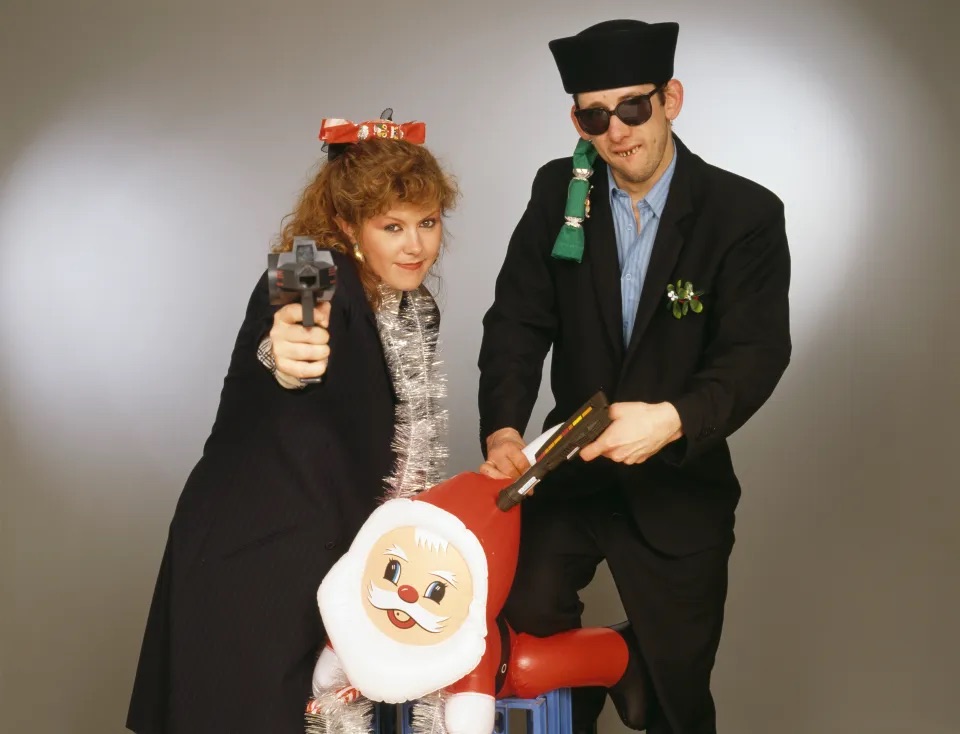
Released in 1987, Fairytale of New York was recorded by Irish-influenced punk band The Pogues, featuring English singer Kirsty MacColl. The Pogues were formed in London in 1982 by Shane MacGowan and fellow musicians, bringing together traditional Irish folk music and the energy of punk rock. Their sound drew on instruments such as the tin whistle, banjo and accordion, giving their music a distinctly Irish character.
MacGowan’s songwriting was particularly rooted in the lives of ordinary working-class people. His songs often explored poverty, drinking, unemployment, immigration and the struggles of those living on society’s margins. Having grown up between England and Ireland, he was deeply connected to his Irish heritage and the experiences of the Irish diaspora. His characters were rarely wealthy or particularly respectable. They were ordinary people with big dreams, difficult lives, plenty of humour and even more problems.
Written by MacGowan and fellow Pogues member Jem Finer, Fairytale of New York was eventually recorded as a duet, with MacColl joining MacGowan to provide the female vocals. The result was something quite different from the Christmas songs that dominated the charts at the time. There are no grand orchestral arrangements, jingling bells, or particularly cheerful declarations of festive romance.
Instead, the song and music video begin with a gentle piano introduction before MacGowan’s unmistakably rough voice introduces us to a Christmas Eve spent in a New York police station’s drunk tank. An elderly man begins singing an Irish folk song, prompting the narrator to remember a woman he once loved and the dreams they shared. The song then takes us back to the couple’s younger days, when they arrived in New York with hopes of a better life. They imagined a city of grand buildings, golden opportunities and endless possibilities. They dreamed of Broadway, falling in love and spending their lives together. For a moment, everything seemed possible.
However, their dreams gradually unravel. The couple have grown older, their circumstances have deteriorated and their relationship has become increasingly bitter. Their romantic memories give way to a heated exchange of insults, with each blaming the other for the life they have ended up living. MacColl’s sharp, almost theatrical delivery contrasts brilliantly with MacGowan’s gravelly voice, making their argument feel like a realistic conversation between two people who know each other all too well.
Yet beneath the insults and drunken arguments, there is still affection. Towards the end, the song returns to the idea that the pair once shared something special. Despite everything that has gone wrong, they remain connected by the dreams they built together. It’s a surprisingly touching ending for a song that spends much of its time exchanging insults.
The song has also attracted controversy over the years. One particular line contains a homophobic slur, leading to debates about whether the original recording should be broadcast uncensored. Some have argued that the word had an older meaning in Irish slang, referring to a fool or a waster, although this interpretation is disputed and the word is widely recognised today as an offensive term for gay men. MacGowan defended the lyric in 2018, explaining that it reflected the character’s speech and desperate circumstances. He described her as a woman who was down on her luck and stressed that the characters were never intended to be particularly respectable or likeable. For him, the argument was part of portraying two flawed people authentically. The debate has nevertheless continued, with some radio stations choosing to censor the word while others continue to play the original recording.
Despite the controversy, the song’s popularity has endured. When it was first released, it reached number two on the UK Singles Chart, missing out on the Christmas number one to the Pet Shop Boys’ cover of Always on My Mind. It has since returned to the UK Top 40 every year since 2005, becoming one of the country’s most enduring festive chart fixtures. Interestingly, it has never actually reached the coveted number one position.
For me, the song has always been part of Christmas. Growing up in England, I remember hearing it every December, whether on the radio, in shops or playing in the background during the festive period. Even after moving to Japan, hearing those opening piano notes brings back memories of Christmas in Britain. It’s as much a part of the season as gathering with family, attending church on Christmas Eve and sitting down for a roast dinner with Yorkshire puddings.
Kirsty MacColl tragically died in December 2000, aged 41, after being struck by a speedboat while swimming in a restricted area off the coast of Cozumel, Mexico. Shane MacGowan passed away in November 2023, aged 65. Both artists have left behind an extraordinary musical legacy, with their voices forever intertwined in a song that returns to British and Irish airwaves every winter.
For American listeners and others around the world who might be more familiar with Mariah Carey, Wham! and the usual Christmas playlist staples, Fairytale of New York deserves a place alongside them. Its story of lost dreams, complicated relationships, Irish musical influences and imperfect romance captures something that traditional Christmas songs rarely explore.
It might not have the cheerful bells, picture-perfect romance or magical Christmas imagery of other festive classics, but that’s precisely why it has endured. For millions of people across Britain and Ireland, Christmas simply wouldn’t feel quite the same without it.




Leave a Reply