
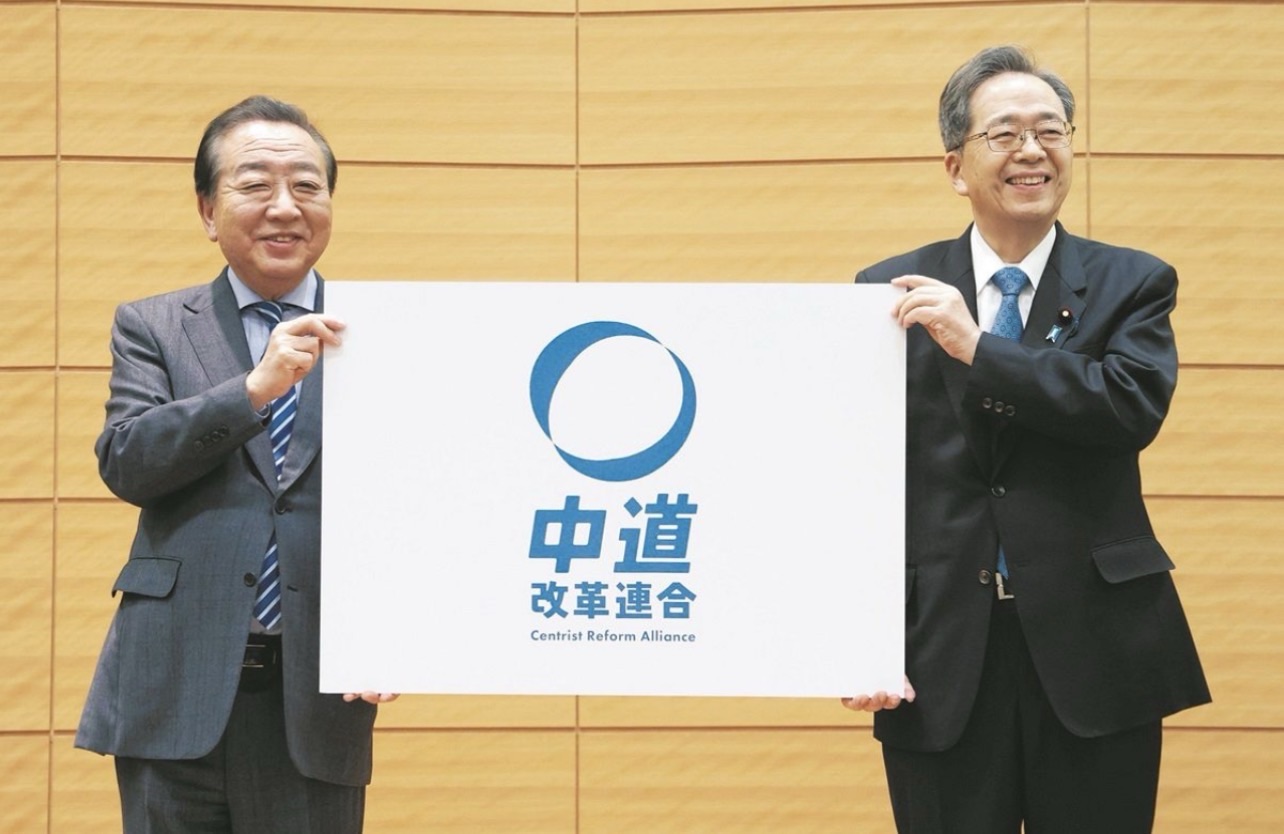
Photo: Tokyo Shinbun
For the first time in 18 months, I was finally able to return to my other home country, England. Within my first few days back, I found myself watching global affairs unfold on British television, coverage that understandably focused almost entirely on international news. At the same time, however, I was viewing on my phone just how rapidly Japanese politics was escalating. Former Prime Minister Yoshihide Suga announced that he will not run in the upcoming Lower House election and will retire from politics.1 Taro Yamamoto, leader of an opposition party Reiwa Shinsengumi, resigned his seat in the House of Councillors due to health reasons linked to multiple myeloma, a form of blood cancer.2 Meanwhile, Prime Minister Sanae Takaichi had dissolved the lower house and called a snap general election for February 8, 2026, which I won’t be in Japan for. All of these developments are significant national headlines in Japan.3 The most surprising political event for me, however, occurred the morning after my arrival on 16th January. On that day it was announced that the Constitutional Democratic Party of Japan (CDP), the largest opposition party, and Komeito, until recently the long-standing junior coalition partner of the ruling Liberal Democratic Party (LDP), have launched a new political party called the Centrist Reform Alliance.4 This article aims to explain what this new party is, what it stands for, whether it represents a full merger or a strategic alliance, and what its formation could mean for the upcoming general election in Japan.
During the period following the October 2025 general election, before it became clear the LDP had narrowly won, several opposition parties attempted to form alliances with each other. The election results that showed the historically weak LDP had prompted speculation that a coordinated opposition bloc could potentially displace them. During this time, The CDP leader Yoshihiko Noda held talks with the leaders of the Democratic Party For the People (DPP) and the Japan Innovation Party (JIP). These discussions were reportedly aimed at capitalising on the LDP’s seat losses and constructing an alternative governing coalition, and were widely interpreted as an attempt by the opposition to join forces and build a coalition of their own.5 This had failed, however, as reporters widely noted that significant ideological differences stood in the way, with both the DPP and JIP viewed as occupying a more right-leaning position than the CDP. This limited their willingness to cooperate in an alliance. At the same time, Komeito, which until recently was the LDP’s coalition partner for over a decade, chose to end its coalition government with the ruling party. This decision to part ways was a result of disagreements over the LDP’s leadership direction following new Prime Minister Takaichi’s rise.6 Komeito reportedly regarded her as leaning too far to the right. Unexpectedly, the LDP instead formed a new coalition with the JIP, which is just over 10 years old.7 Despite the change in partner, the overall structure of power remained largely unchained; the LDP continued in power, supported by a smaller ally, while the CDP once again failed to unite the opposition with similar interests into a single governing alternative. This fact would remain in place for just over three months.
Former political rivals Yoshihiko Noda of the CDP and Tetsu Saito of Komeito were seen at a conference together, announcing the creation of their new political party, the Centrist Reform Alliance (CRA). The new alliance came as a surprise, as until recently the two parties were rivals. It can be taken away that is a growing space for a centrist given the current state of Japanese politics, which made the announcement make sense to some, while sounding unnecessary or even silly to others. The CRA’s policies are fairly broad at this moment in time. On social policy, the CRA focuses heavily on family support, childcare expansion, and improving work-life balance, tying this to Japan’s declining birth rate and ageing population. The alliance also claims to support anti-racism and opposition to discrimination, as well as protecting minority and human rights overall. This includes foreign residents, migrants, and LGBTQ+ people. Economically, the CRA seems to position itself somewhere between the LSP’s pro-business stance and the left’s more redistributive ideas. It supports raising wages, especially for young workers, while simultaneously stressing fiscal responsibility and support for small and medium-sized businesses. Rather than major tax reform, the alliance talks more about efficiency, coordination with businesses, and gradual reform, which fits its centrist image.8
Institutionally, the CRA only exists in the House of Representatives, where the two parties have effectively merged into a single parliamentary grouping. The confusing part is, they still exist as separate parties in the House of Councillors. This means that while they have merged in the lower house, they still operate as separate entities at the same time, which makes the alliance feel temporary and slightly awkward. One may assume from this that both parties want the benefits of cooperation, without fully committing to a permanent merger. As for the upcoming election in February, this arrangement could help reduce vote-splitting among centrist voters, particularly in close lower-house constituencies, and make it harder for the LDP to win by default.
As for the upcoming election, this arrangement could help reduce vote-splitting among centrist and moderate voters, particularly in close lower-house constituencies, and make it harder for the LDP to win by default. At the same time, the lack of a clear identity or bold policy direction may limit the CRA’s appeal beyond tactical voting.
Overall, the Centrist Reform Alliance appears less like a fully formed new party and more like a strategic experiment. While it reflects real dissatisfaction among voters with the current political landscape, its success will depend on whether the public see it as a genuine centrist alternative, or simply an opportunistic alliance designed to survive the next election.
1 Nikkei
3 NHK News
7 NHK News





Leave a Reply