
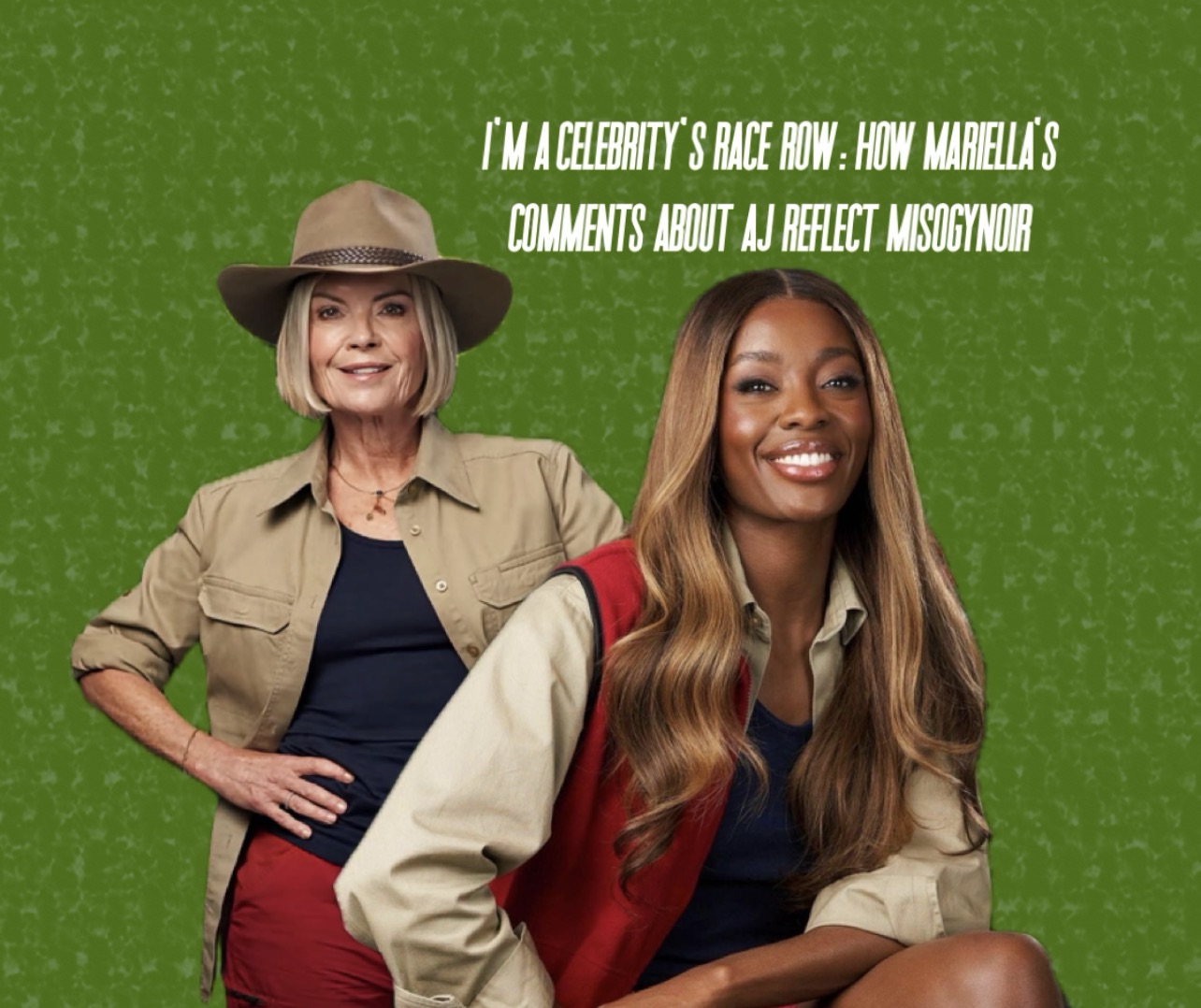
During this year’s series of the British reality television programme I’m a Celebrity… Get Me Out of Here!, one exchange between two campmates sparked widespread debate online and prompted 887 complaints to Ofcom. The programme, which brings together celebrities from different backgrounds to spend several weeks in the Australian jungle, features broadcaster Mariella Frostrup and television presenter AJ Odudu among this year’s contestants. The pair had been assigned cooking duties in camp, and tensions had been building over their respective responsibilities.
On the 22nd of November, the disagreement came to a head. During a conversation in front of their fellow campmates, Mariella described AJ as “aggressive” and accused her of making “a drama out of a crisis”. AJ challenged the description, asking Mariella not to use those words towards her, explaining that “dramatic” and “aggressive” were particularly harsh terms. The exchange left AJ visibly distressed and in tears. While the disagreement itself might have appeared to be a relatively minor clash over household responsibilities, the language used towards AJ prompted a much wider discussion. For many viewers, the issue extended beyond the argument itself. Describing a Black woman as aggressive, particularly when she is calmly expressing her disagreement, carries associations with a longstanding racial stereotype.
To understand why this particular exchange resonated with so many viewers, it is worth introducing a concept that remains relatively unfamiliar to much of the wider public: misogynoir.
What is misogynoir?

Dr. Moya Bailey. Photo: YES! Magazine
The term misogynoir was coined by Black feminist scholar Dr. Moya Bailey and combines the words “misogyny” and “noir”, the French word for black. In an interview with New America discussing her book Misogynoir Transformed: Black Women’s Digital Resistance, Bailey described it as “the specific anti-Black misogyny that Black women experience”. The concept recognises that racism and sexism do not always operate independently. Instead, they can intersect to create particular forms of prejudice and discrimination directed towards Black women.
Misogynoir can manifest itself through the language used to describe Black women, the expectations placed upon them and the ways they are represented in popular culture. Two particularly relevant stereotypes are the “strong Black woman” and the “angry Black woman”. The strong Black woman stereotype might initially appear complimentary. Black women are frequently portrayed as exceptionally resilient, independent and capable of enduring hardship without needing support from others. However, this seemingly positive representation can carry problematic expectations.
Black women can be expected to remain strong regardless of the difficulties they face, putting the needs of others before their own and enduring situations without displaying vulnerability. Their resilience can become something society expects from them rather than something it recognises and respects. This is explored in a video essay by The Take, titled The Strong Black Woman Trope, Explained. The video examines how Black women have historically been represented in film and television, including characters who are expected to be endlessly nurturing, selfless and strong. It also explores how Black female characters are frequently placed in supporting roles, serving as sources of guidance and strength for the central characters while receiving comparatively little development of their own personal stories. The video considers characters such as Miranda Bailey from Grey’s Anatomy, Olivia Pope from Scandal and Michonne from The Walking Dead. Although these characters are very different, their portrayals demonstrate how popular culture can repeatedly associate Black womanhood with strength, responsibility and an ability to overcome hardship.
The stereotype has historical roots in the Sapphire caricature, which portrayed Black women as domineering, argumentative and hostile. Such representations have contributed to a wider perception that Black women are naturally more confrontational or less deserving of sympathy. These assumptions can influence how their behaviour is interpreted, even when they are simply expressing disagreement or defending themselves. Their words and emotions can be interpreted as aggression, even when they are communicating calmly or responding to unfair treatment. The focus shifts away from what they are saying and towards how others perceive their tone and behaviour. This creates an unfair double standard. A woman expressing frustration might be regarded as assertive or passionate, while a Black woman displaying the same behaviour risks being labelled aggressive or intimidating.

Photo: The Independent
These stereotypes are worth keeping in mind when considering Mariella and AJ’s disagreement. When Mariella described AJ as “aggressive” during their disagreement over cooking duties, it echoed a stereotype that Black women have long experienced. The issue is not necessarily whether Mariella intended to make a racially charged remark, as we cannot establish someone’s intentions from a television exchange alone. However, it is equally important to recognise that language carries associations beyond the intentions of the person using it.
Following the initial exchange, fellow campmate Wayne Rooney intervened, telling Mariella that he had not perceived AJ as being aggressive. Mariella appeared upset by his response, explaining that AJ had been looking directly at her while speaking, whereas Rooney had been chatting to fellow campmate Claire Sweeney during the disagreement. However, watching the exchange back, Rooney and Sweeney were listening to the conversation unfold right beside Mariella and AJ.
What followed also raised questions about how the disagreement was being handled. During their subsequent conversation, Mariella apologised to AJ, but prefaced it with “I’m sorry if it offended you”. She then placed her hand on AJ’s shoulder and asked whether they were alright now. Framed as a straightforward yes-or-no question, it left little room for AJ to explain that she was still hurt without appearing unwilling to accept the apology or move on. With cameras recording their every interaction, rejecting the gesture would hardly have been easy. AJ was effectively being asked to bring the disagreement to a close on Mariella’s terms, despite the fact that she had not necessarily had the opportunity to fully express why she was upset.

Photo: The Guardian
The situation became even more uncomfortable when AJ later attempted to explain why the word had affected her so deeply. During their conversation on the 24th of November, Mariella apologised again for calling AJ aggressive. However, when AJ explained how her emotions and intentions could be misconstrued because of how she was perceived as a Black woman, Mariella shifted the discussion towards her own experiences as a woman. She suggested that being labelled aggressive was primarily a gender issue, arguing that women who speak their minds and are forthright are often described this way, whereas men displaying similar behaviour are considered strong.
There is certainly truth in this observation. Women across racial backgrounds experience sexism, and being labelled aggressive for expressing an opinion is not exclusive to Black women. However, this does not account for the additional racial dimension that AJ was attempting to explain. AJ acknowledged Mariella’s point but emphasised that the word carries particular weight for Black women. She explained that while other people might be allowed to express a range of emotions, her own behaviour could be interpreted as aggressive or dramatic. As she put it, “The moment passes for you, but it doesn’t pass for me.”
Her response highlights an important distinction. Misogynoir does not suggest that other women never experience discrimination or that only Black women can be subjected to unfair labels. Instead, it recognises that Black women can experience sexism through racial stereotypes that are not necessarily imposed upon other women in the same way.
It is important to acknowledge that Mariella may not have intended any racial prejudice through her original comment. She may have understood the disagreement as an ordinary clash between two women and viewed the word as a description of AJ’s behaviour rather than something connected to race. Nevertheless, the wider historical context of the language deserves consideration, regardless of whether that context was consciously intended.
Why the conversation matters
Since the incident, some viewers have dismissed the racial dimension of the disagreement, suggesting that it was simply an argument between two campmates or that women of all backgrounds experience similar treatment. Others have expressed frustration at what they perceive as the “race card” being played whenever race is brought into a disagreement. However, this response overlooks why the incident resonated with so many Black viewers in the first place.
But recognising misogynoir does not require dismissing the experiences of other women. It requires acknowledging that Black women can face a distinct form of prejudice shaped by the intersection of racism and sexism. The word “aggressive” is not inherently racist, nor does its use automatically demonstrate racial prejudice. However, when directed towards a Black woman who is expressing disagreement, it is worth considering the historical stereotypes that can influence how her behaviour is interpreted.
The discussion surrounding AJ and Mariella provides an opportunity to introduce a concept that deserves greater recognition. Misogynoir is not simply another word for racism or sexism; it gives a name to an experience that can otherwise be overlooked when these forms of discrimination are discussed separately. Ultimately, we cannot properly recognise or challenge an experience if we lack the vocabulary to identify it. Whether or not Mariella intended to cause offence, the conversation surrounding her comments demonstrates why understanding misogynoir remains important.

Photo: Deadline



Leave a Reply